
Table of Contents (Click to Expand)
- 1. Why Contractors Specify Complete Lock Assemblies
- 2. Replacement Economics on Commercial Jobs
- 3. Cross-Referencing Before You Bid
- 4. Six Fitment Parameters to Verify
- 5. Corrosion, Codes & Compliance
- 6. Single Hook vs. Multi-Point Security
- 7. Procurement Logistics & Lead Times
- 8. Field Failures to Avoid
- 9. Frequently Asked Questions
Executive Summary: What US Project Contractors Need From Sliding Door Mortise Lock Hardware
- Buy Assemblies, Not Loose Parts: Field data from commercial replacements shows that sourcing a complete lock housing with its hook, faceplate and keeper cut callback rates by roughly 80% compared with rebuilding individual internal components.
- Fitment Is the Whole Job: Three measurements decide whether a retrofit lands in 15 minutes or stalls the crew for 2 hours: screw hole spacing, backset depth and faceplate length.
- Compliance Protects the Bid: Coastal and high-rise openings demand documented ASTM B117 salt spray results between 72 and 96+ hours plus AAMA 907 and EN 13126-15 fatigue data before an inspector signs off.
1. Why US Contractors Specify Sliding Door Mortise Lock Hardware as Complete Assemblies
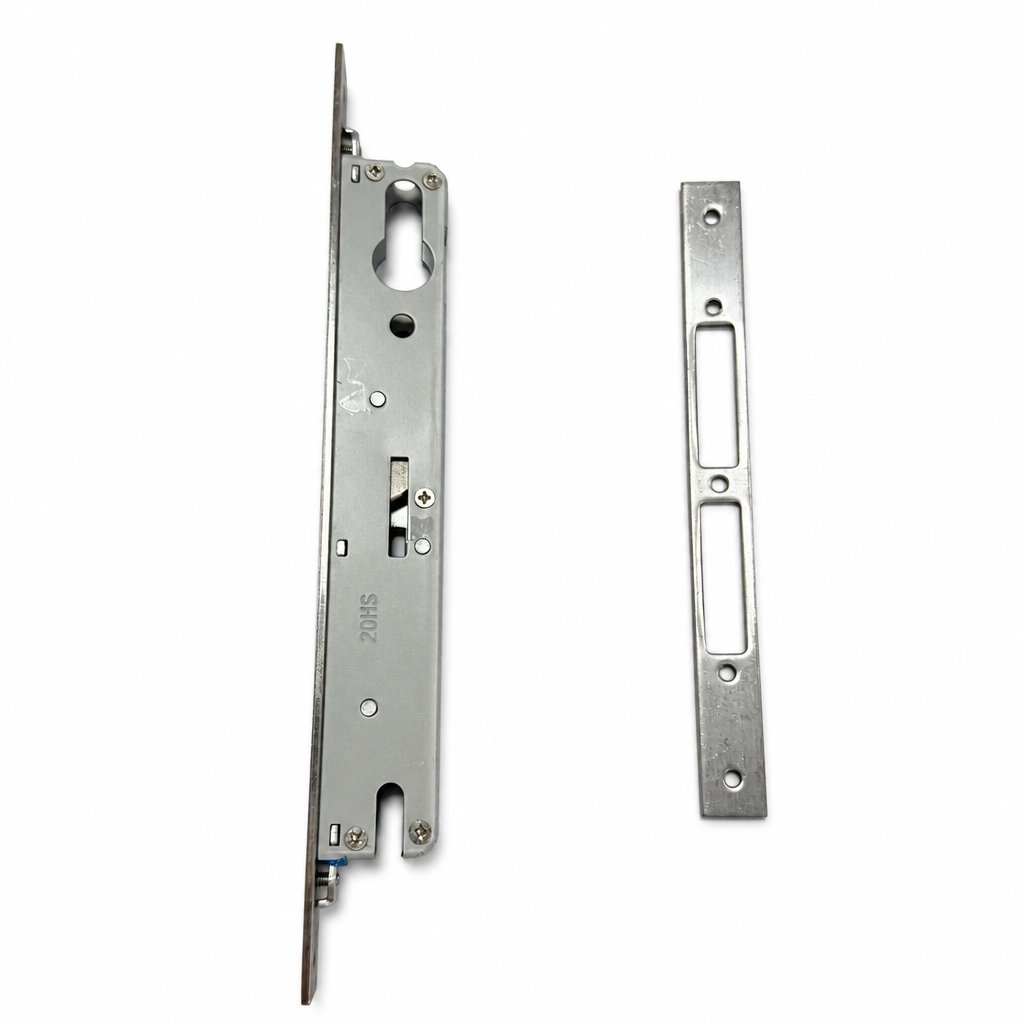
Sliding door mortise lock hardware sits inside a milled pocket in the sash, which means every millimetre of the housing interacts with the door profile, the handle escutcheon and the jamb keeper. Consequently, specifying an assembly rather than individual springs, latches and gear arms removes the single largest source of rework on multi-unit projects. Browse the full mechanism range on the Huachuang architectural product catalogue to see how housings, actuators and keepers are matched as kits.
Modern commercial specifications rarely tolerate a lock body that simply fits the pocket opening. Furthermore, engineers increasingly require verified load capacity of 120kg to 250kg per panel, hook travel of 36mm or more, and height adjustment logic within a tolerance band of plus or minus 5.0mm to 8.0mm. As a result, contractors who purchase from a source manufacturer with in-house tooling receive dimensional consistency across hundreds of units instead of batch-to-batch drift.

2. Replacement Economics: The True Field Cost of a Failing Sliding Door Mortise Lock
Hardware is never the expensive line item on a service call, because labour dominates the invoice. Specifically, US installers bill between 85 and 150 dollars per hour, so a 90-minute rebuild on site consumes more than 200 dollars of crew time before any part reaches the truck. Consequently, a failed sliding door mortise lock assembled on site from loose components rarely beats a factory-sealed replacement.
Because a drop-in retrofit assembly matches the original pocket, mounting holes and faceplate length, a two-person crew completes the change-out in roughly 15 minutes. In contrast, rebuilding internal gear arms, springs and hooks can absorb 60 to 90 minutes and still carries a genuine risk of a second visit. Additionally, verified measurement data for every replacement programme is documented in our sliding door mortise lock hardware selection guide, which covers hole spacing grids and single versus multi-point configurations.
For a 40-unit condominium or hotel corridor, that difference compounds quickly. Therefore, budgeting on cycles rather than on unit price is the only reliable way to protect margin across 100,000 opening cycles of service life.

3. Cross-Reference First: Retrofitting Existing Mortise Lock Bodies Before You Bid
Most replacement work in US commercial buildings involves hardware that was installed 10 to 25 years ago, and the original manufacturer may no longer supply the exact body. However, a source factory with more than 1,000 proprietary die-casting and stamping molds can reverse-engineer pocket geometry, hook travel and keyway angle to reproduce the discontinued part. As a result, a compliant cross-reference replacement becomes a procurement decision rather than a design change.
Contractors frequently request compatibility audits against established benchmarks such as Truth Hardware (AmesburyTruth), Roto, Interlock, Emtek, Prime-Line, Adams Rite and INOX. Specifically, we compare four dimensions before quoting: faceplate length, screw hole centres, backset and hook projection. Subsequently, our engineering team issues a drawing overlay so your site supervisor can confirm the fit on one sample door before the remaining order ships.
That overlay step matters because a 1.5mm deviation on hole centres is enough to force new drilling, which instantly voids the drop-in retrofit promise and adds 30 to 45 minutes per opening.
4. Six Fitment Parameters to Verify on Every Sliding Door Mortise Lock Order
Purchasing agents who verify these six values before releasing a purchase order eliminate almost every returns scenario within the first production run. Furthermore, the table below mirrors the tolerance language we publish on our hardware sample showroom pages, so your submittal package and the factory drawing use identical numbers.
| Fitment Parameter | Common US Dimensions | Why It Decides the Installation |
|---|---|---|
| Screw Hole Spacing (Centres) | 3-9/16 in (90.5mm), 3-11/16 in (93.6mm), 3-15/16 in (100mm) | Controls whether the handle plate bolts onto the existing sash holes |
| Faceplate Length and Width | 11/16 in x 9 in (17.5mm x 229mm), round faceplate variants | Must sit flush in the milled edge recess without planing the sash |
| Backset Depth | 1-1/8 in (28.5mm), 20.0mm body depth | Sets the distance from door edge to keyway or thumbturn centre |
| Door Thickness Compatibility | 1-3/8 in to 1-3/4 in (35mm to 45mm) | Determines cylinder tailpiece and through-bolt length |
| Hook Projection and Travel | 36.41mm stroke with 0.0mm to 0.50mm micro-adjustment | Governs compression against the keeper and rattle-free closure |
| Keyway Angle | 45 degree keyway, secondary thumbturn configurations | Matches the actuator orientation inside the escutcheon |
5. Coastal Corrosion and Compliance: AAMA 907, ASTM B117 and EN 13126-15
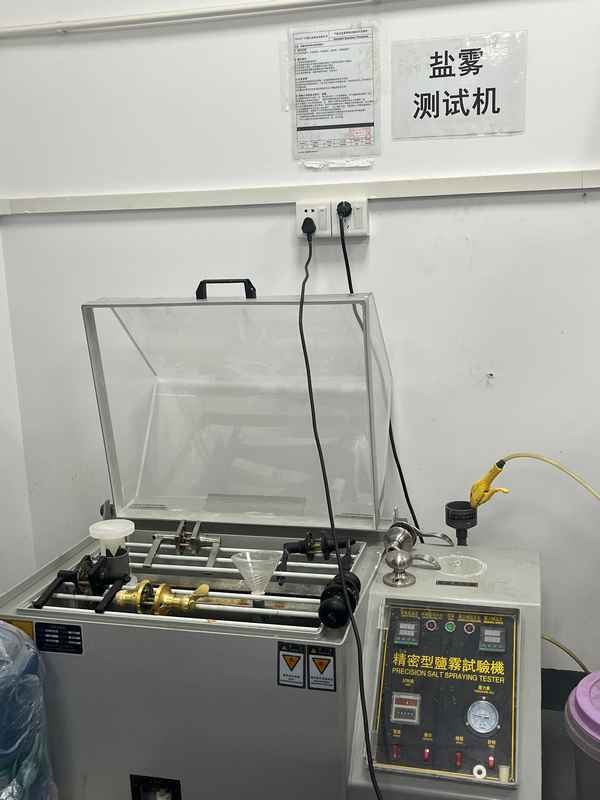
Coastal and high-humidity openings punish cheap plating within a single season, typically producing white rust on zinc surfaces after 200 to 400 hours of exposure. In contrast, our heavy-metal-free finishes such as trivalent chromium yellow zinc, brushed nickel and electro-galvanised coatings survive 72 to 96+ hours of neutral salt spray testing per ASTM B117. Consequently, specifiers can document corrosion performance without relying on supplier marketing language.
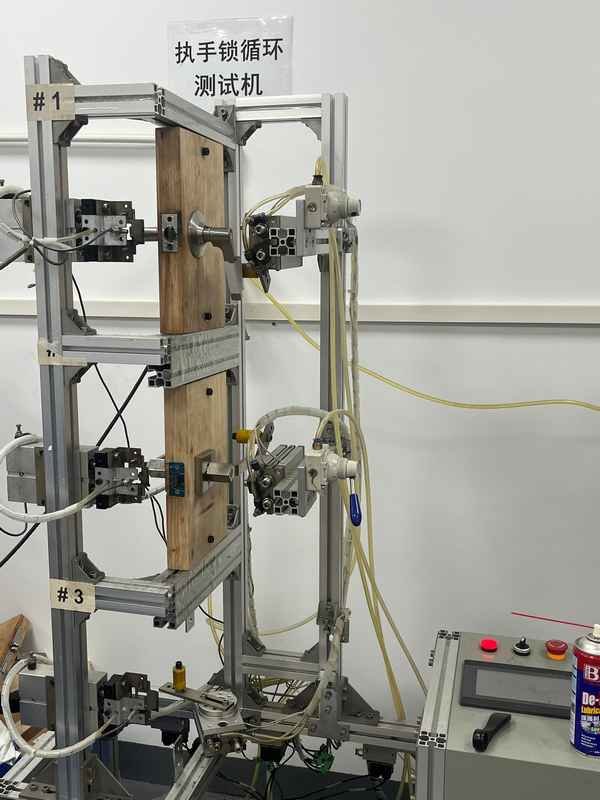
Structural performance follows the same evidence-first logic. Specifically, our sliding door mortise lock hardware is fatigue-verified beyond 100,000 continuous cycles and benchmarked against AAMA 907 and EN 13126-15 requirements; published guidance from FGIA remains the reference point for US fenestration testing protocols. In addition, we test finished assemblies for SGS RoHS compliance and operate under an ISO 9001 quality system, with raw data available for submittals through our certified test report library.
Because inspection failure costs far more than the hardware itself, we recommend attaching these documents to the bid package at the same time you submit the door schedule.
6. Single Hook vs. Multi-Point: Matching Security Level to Opening Type
Security requirements vary sharply between a third-floor balcony slider and a ground-floor retail frontage, and the hook count should follow the exposure. Practically, single hook mortise locks satisfy most residential patio openings of 1-3/8 in thickness, while multi-point bodies with two or three hooks plus top and bottom shoots suit commercial entries. Furthermore, distributing the load across multiple engagement points resists pry forces above 2,000 pounds.
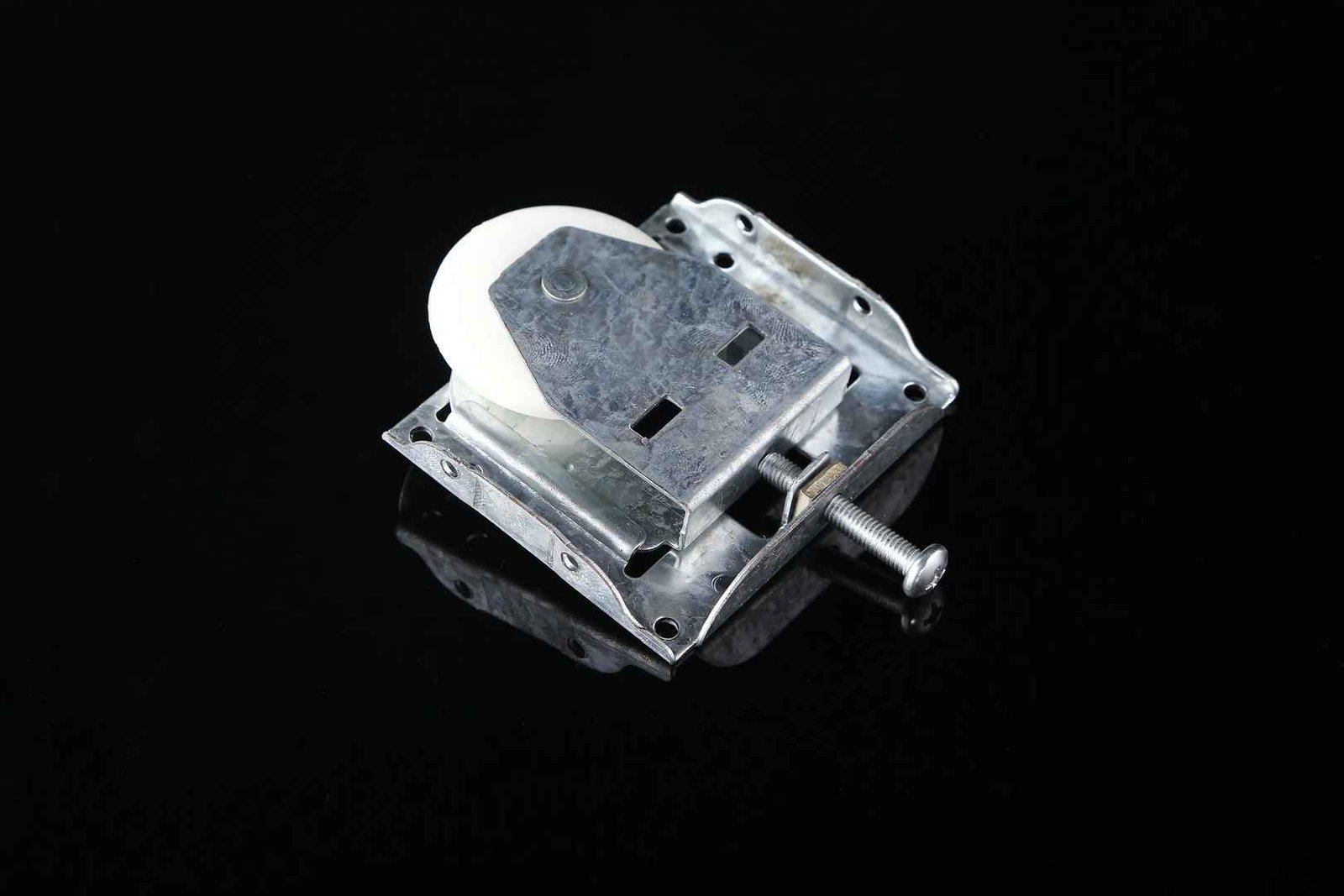
Installers should also confirm that the transmission rod length matches the frame height, because a rod that is 10mm short leaves the upper shoot unengaged and fails the security check. Therefore, we supply rod sets pre-cut to the project’s rough opening and label each assembly by unit number for straightforward staging on site. The same assembly-level discipline applies to companion components, such as the HC-PJS-173-S sliding door roller assembly, which is kitted with its stamped steel carriage and height adjustment mechanism.
7. Procurement Logistics: MOQ, Lead Times and Buffer Inventory for Job Sites
Schedule risk, not unit price, is what forces contractors to abandon a supplier mid-project. Nevertheless, sourcing overseas becomes predictable when the factory holds finished-goods buffer inventory and can mix container loads. Specifically, our Zhongshan facility maintains stock across the highest-turnover roller, handle and lock housings, dispatching repeat orders in 7 to 14 days, while bespoke tooling programmes run 25 to 35 days after drawing approval. You can review the production environment in the factory capabilities and tour page.
Low minimum order quantities between 500 and 1,000 pieces per SKU allow a first delivery sized to one building rather than to an entire development. Additionally, mixing one lock body variant alongside roller assemblies and handle sets in a single 20-foot container keeps freight cost per unit between 0.05 and 0.12 dollars for high-density hardware.
Documentation discipline matters just as much as freight arithmetic, because a container that clears customs 3 days late still stops the crew. Accordingly, we issue packing lists mapped to unit numbers, carton-level weight data and HS classification codes 8302.41 before the deposit is released. For projects running on a 12 to 18 month construction schedule, this allows your procurement team to release hardware in 2 or 3 staggered shipments matched to the installation sequence instead of warehousing the full quantity on site.
8. Field Failures to Avoid When Installing Sliding Door Mortise Lock Hardware
Four failure patterns account for the majority of warranty callbacks we review, and each one is preventable during the first site visit:
- Measurement substitution: using a faceplate that is 2mm longer than the original recess forces the crew to file the door edge, removing the protective coating and inviting corrosion within 12 months.
- Undersized plating: hardware rated below 72 hours of salt spray develops white rust in coastal zones before the first annual inspection.
- Compression errors: a hook left 1mm shy of the keeper produces rattle complaints that generate a second visit and roughly 2 hours of unbillable labour.
- Rod mismatch: transmission rods cut on site rather than pre-cut to the rough opening leave shoot bolts 5mm to 15mm from full engagement.
Because each of these issues is measurable before installation, we recommend a single sample-door fitment review for every order above 50 units, followed by batch release once the crew confirms alignment.
9. Frequently Asked Questions (FAQ)
Q1: Can a sliding door mortise lock be replaced without cutting or drilling the existing door?
Yes. A drop-in retrofit body is machined to match the original pocket, faceplate length and screw hole spacing, so a two-person crew typically completes the swap in about 15 minutes without cutting the sash or drilling new holes.
Q2: What lead time should US contractors expect on an order?
In-stock housing and faceplate combinations dispatch from buffer inventory in 7 to 14 days, whereas fully custom mortise lock bodies with new tooling require 25 to 35 days after drawing approval.
Q3: How do you verify corrosion resistance for coastal commercial projects?
Finished hardware is tested in a neutral salt spray chamber per ASTM B117 and documented at 72 to 96+ hours, supported by SGS RoHS reports confirming heavy-metal-free trivalent chromium coatings.
Q4: Does Huachuang manufacture custom mortise lock bodies matched to existing brands?
Our 1,000+ in-house die-casting and stamping molds allow us to reproduce pocket dimensions, hook travel and keyway angles so a custom sliding door mortise lock becomes a direct cross-reference replacement for Truth, Roto, Interlock or Prime-Line assemblies.
Source Factory-Direct Sliding Door Mortise Lock Hardware
Send us a photo of the existing lock body, your measured hole spacing and the door thickness, and our engineering team will return a cross-reference drawing with factory pricing, MOQ options and a 7 to 14 day dispatch window for stock configurations.
Request OEM Catalog & Direct Factory Quote →